Supporting you also means helping you gain a clearer understanding
Filter
Clients
Resources
General information on neurocognitive disorders
Document
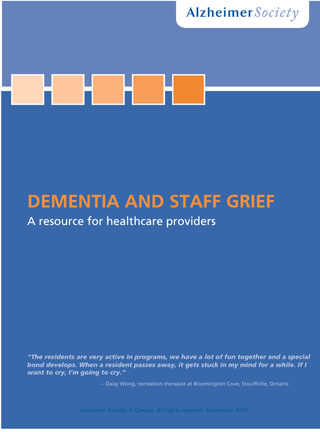
The grief of healthcare workers
This document aims to help healthcare professionals become more aware of the grief experienced by caregivers who provide a continuum of care to people living with neurocognitive disorders. This tool will be useful in supporting your employees in managing grief and sorrow.
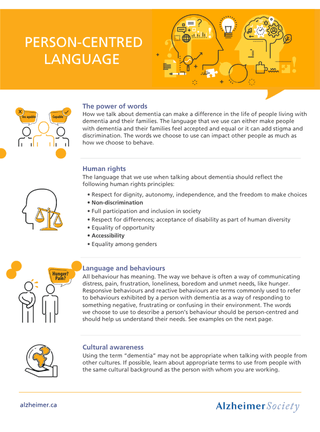
Add this essential tool to your practice to maintain meaningful exchanges and conversations with the people living with neurocognitive disorders whom you support.
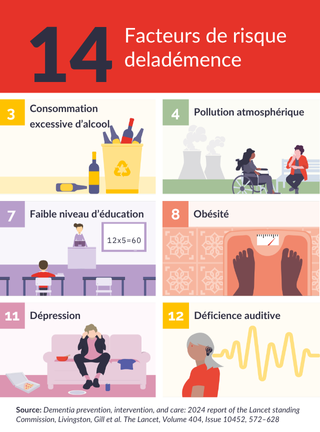
Use this tool created by Alzheimer’s Disease International to identify risk factors that may be associated with the development of neurocognitive disorders.
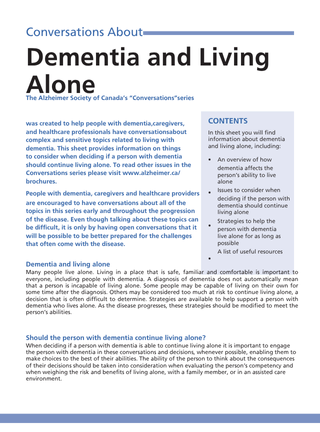
This fact sheet provides information on the various factors to consider when deciding whether a person diagnosed with cognitive impairment should continue to live alone in the community.
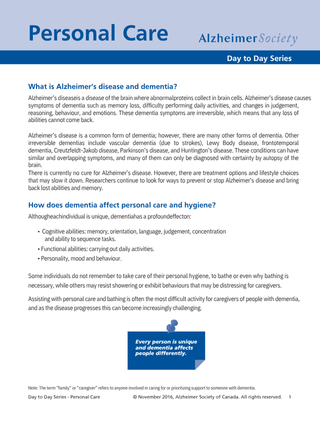
Learn more about how Alzheimer’s disease and related disorders can affect personal hygiene care. Discover tips and tricks to encourage personal hygiene in people living with neurocognitive disorders.
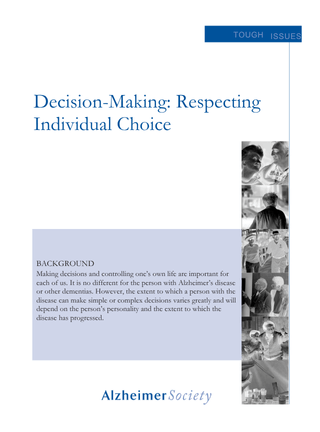
Learn more about the ability of people living with neurocognitive disorders to make decisions that impact their quality of life throughout the progression of the disease.
You are probably feeling worried and anxious about the changes you are experiencing. Now that you know they are caused by a neurocognitive disorder, you may be concerned about your future. Please know that by obtaining a diagnosis, you have taken an important first step.