Discover the 2026 program


Schedule
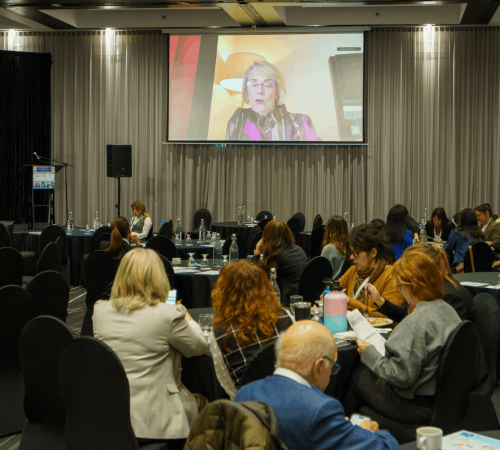
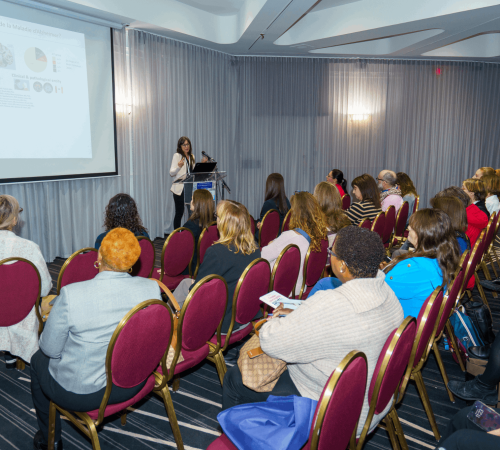
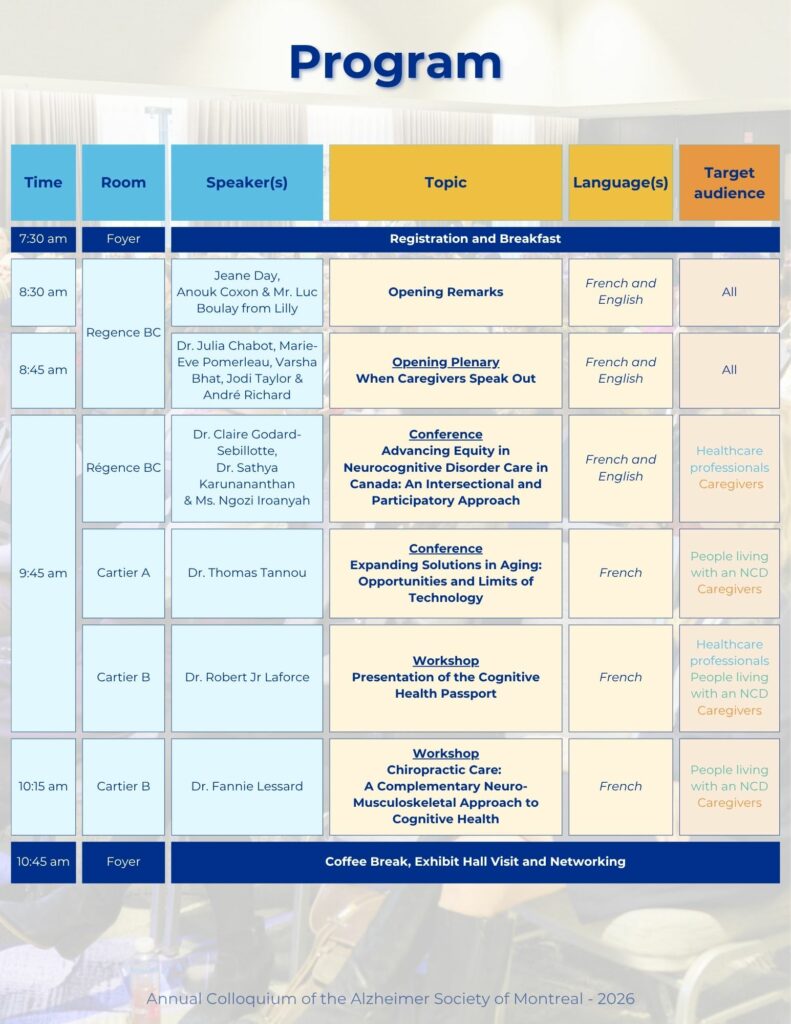
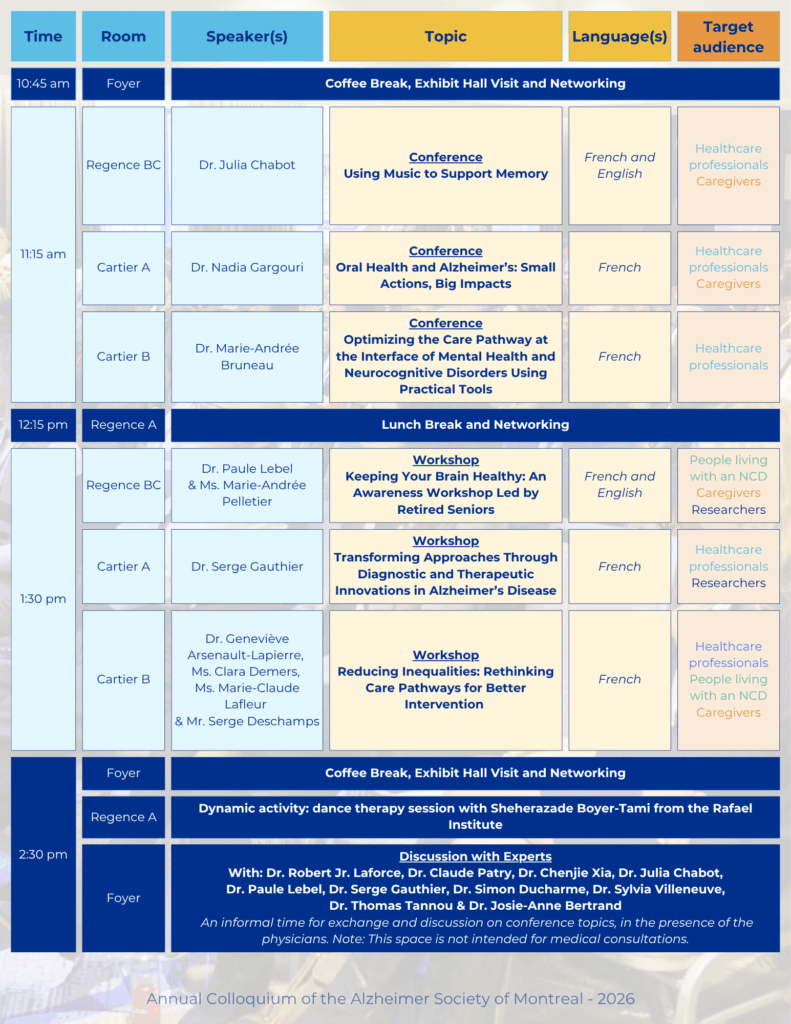
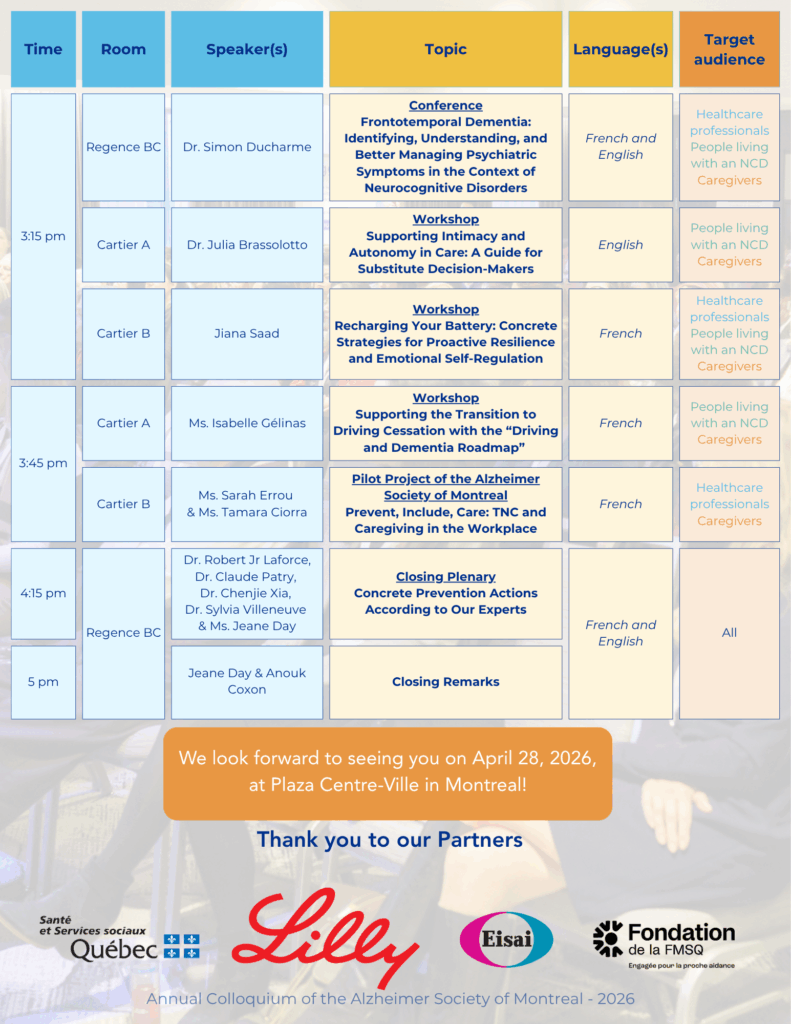
Under the theme Supporting the Future of Brain Health Through Research, Knowledge, and Lived Experience, this event will feature a variety of conferences and workshops allowing participants to discover the latest scientific advances and hear from various seasoned specialists who will share their best practices related to neurocognitive disorders.
Conference language:
Please note that the conferences held in the plenary session will be translated from English to French and from French to English. However, conferences in other rooms will be in French and will not be translated into English.
Speakers
Dr. GENEVIÈVE ARSENAULT LAPIERRE, Ph.D.
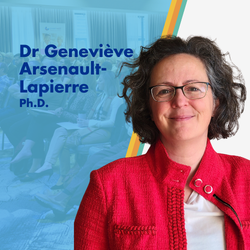
Reducing Inequalities: Rethinking Care Pathways for Better Interventions
Researcher at the Centre for Research and Expertise in Social Gerontology and Associate Professor at McGill University
Dr. Geneviève Arsenault-Lapierre is a researcher at the Centre for Research and Expertise in Social Gerontology (CREGÉS) and an associate professor at the School of Social Work at the Université de Sherbrooke and in the Department of Family Medicine at McGill University. Her work focuses on health and social service policies and programs related to aging, particularly in the context of major neurocognitive disorders. She uses participatory, evaluative, and implementation science methodologies to examine equity in access to care and to support the continuous improvement of practices.
She works closely with clinical practitioners, managers, community organizations, and people with lived experience to co‑construct knowledge that is meaningful for action. She integrates participatory approaches and mixed methods to strengthen reflexivity and critical thinking among learners from all backgrounds and levels, including graduate students, clinical staff, and health managers.
She contributes actively to the research community as the lead of the thematic group on Health Policies, Health and Social Care Services within the Quebec Network for Research on Aging (RQRV). She is also involved in the broader community through her role as scientific lead of the unit for the evaluation of technologies and modes of intervention in social gerontology at the CIUSSS West‑Central Montreal. Her commitment aims to strengthen the links between academic knowledge, professional practice, and social needs.
Ms. VARSHA BHAT

Opening Plenary: When Family Caregivers Speak Up
Vice Chair of the Board of Directors of the Alzheimer Society of Montreal and Senior Advisor, Health Care Systems and Aging, Caregiver
Varsha Bhat is a leader in business growth and innovation, with extensive experience launching new business lines, deploying innovation across North America and Europe, and building cross‑sector alliances in regulated industries.
She brings this expertise and a systemic approach to the ecosystem of aging, elder care, and Age-Tech, enriched by her personal experience as a caregiver and her strong commitment to public‑interest impact. Varsha’s work focuses on caregiver‑centered systems, trust, and the intersection of policy, healthcare, and innovation.
She is the founder and host of the Aging With Dignity podcast, a community initiative that amplifies caregivers’ voices and shares practical guidance to inform family, industry, and policy discussions. Varsha also advises organizations and public institutions on sustainable models of elder care and is emerging as an influential voice on aging as essential social and economic infrastructure.
Dr. JULIA BRASSOLOTTO, Ph.D.
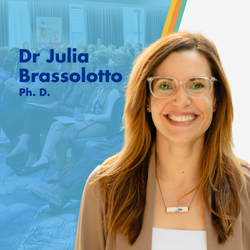
Supporting Intimacy and Autonomy in Care: A Guide for Substitute Decision-Makers
Associate Dean, Faculty of Health Sciences, University of Lethbridge, and Assistant Professor in Public Health
Dr. Julia Brassolotto is the Associate Dean of the Faculty of Health Sciences at the University of Lethbridge and an Assistant Professor in the university’s Public Health program.
She is a qualitative researcher and social scientist. Her research focuses on care for older adults, with particular attention to continuing care, community contexts, and end‑of‑life settings.
Her work has been funded by Alberta Innovates, the Social Sciences and Humanities Research Council (SSHRC), and the Canadian Institutes of Health Research (CIHR). She is passionate about supporting intimacy and sexual expression among older adults.
Dr. MARIE-ANDRÉE BRUNEAU, MD, M.Sc., FRCPC
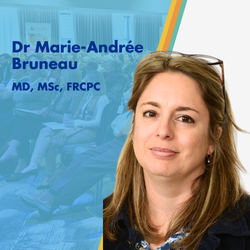
Optimizing Care Pathways at the Interface of Mental Health and Neurocognitive Disorders Using Practical Tools
Geriatric Psychiatrist, Clinical Full Professor, Department of Psychiatry and Addictology, Université de Montréal; Researcher, IUGM Research Centre (CRIUGM)
Dr. Bruneau obtained her postgraduate degree in psychiatry in 2001, along with a master’s degree in Biomedical Sciences from the Faculty of Medicine at the Université de Montréal.
She has been certified as a geriatric psychiatrist by the Royal College of Physicians and Surgeons of Canada since 2013. She is a Clinical Full Professor in the Department of Psychiatry and Addictology at the Université de Montréal. From 2011 to 2021, she served as Associate Director of the department for the Division of Geriatric Psychiatry.
She has practiced at the CHUM and at the Institut universitaire de gériatrie de Montréal, where she led a program dedicated to BPSD (Behavioral and Psychological Symptoms of Dementia). In this role, she has been—and continues to be—deeply involved with Quebec’s Ministry of Health and Social Services (MSSS) as part of the Alzheimer Plan, contributing to multiple projects involving service redesign, clinical training, and the development of clinical tools and practice guidelines.
She has also been involved in the expert group of the Canadian Coalition for Seniors’ Mental Health for the new Canadian recommendations on BPSD. Since 2022, she has developed a community‑based geriatric psychiatry clinic.
Dr. JULIA CHABOT, MDCM, FRCPC, M.Sc.
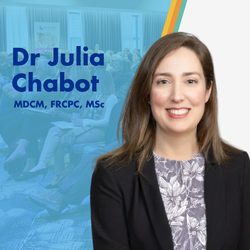
1. Moderating the Opening Plenary Session: When Caregivers Speak Out
2. Using Music to Support Memory
Geriatrician at St. Mary’s Hospital and President of the Quebec Association of Geriatricians
Dr. Julia Chabot has been a geriatrician at St. Mary’s Hospital Center since 2018 and is an Associate Professor in the Department of Medicine at McGill University. She completed her geriatrics residency at McGill, as well as a research‑focused master’s degree in psychology at the Université de Montréal. As part of her master’s work, she conducted a study on the effects of music on the health of hospitalized patients in the geriatrics unit.
She served as Program Director for the geriatrics residency at McGill for six years. Since May 2025, she has been President of the Association of Geriatricians of the Province of Quebec.
Ms. TAMARA CIORRA & Ms. SARAH ERROU

Pilot Project of the Alzheimer Society of Montreal Prevent, Include, Care: TNC and Caregiving in the Workplace
Brain Health Educators and Advisors, Educational Services, Alzheimer Society of Montreal
TAMARA CIORRA – A graduate of Concordia University with a Bachelor’s degree in Leisure Studies and a specialization in Therapeutic Recreation, Tamara brings energy and engagement both to her professional environment and her personal life. In the winter, she enjoys skiing, while in the summer she spends her free time roller skating.
Tamara has several years of experience as both a volunteer and a professional in residential settings and long-term care centres (CHSLDs).
She builds meaningful connections wherever she goes! Of Italian origin, she firmly believes that food—like the training sessions she delivers—has the power to bring people together.
SARAH ERROU – Holding a Bachelor’s degree in Mathematics and a diploma in Education, Sarah began her career as a math teacher before discovering her passion for psychology.
She volunteered at a psychosocial intervention research centre in Lebanon while completing her psychology studies. She later expanded her skill set by becoming a certified consulting hypnotherapist.
After arriving in Quebec, Sarah worked in a residence for seniors, where she devoted herself to geriatrics, with a strong commitment to improving the quality of life of older adults.
Dr. SIMON DUCHARME, MD, FRCPC
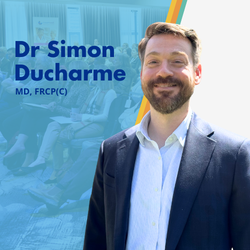
Frontotemporal Dementia: Identifying, Understanding, and Better Managing Psychiatric Symptoms in the Context of Neurocognitive Disorders
Neuropsychiatrist, Associate Professor, Department of Psychiatry, McGill University
Dr. Ducharme is a neuropsychiatrist and clinician‑researcher at the Douglas Mental Health University Institute and the McGill University Health Centre (the Neuro – MNI). He specializes in frontotemporal dementia and in the interface between psychiatric disorders and neurodegenerative diseases.
His research focuses on identifying new biomarkers of dementia and developing clinical trials, including innovative approaches such as gene therapies for frontotemporal dementia.
Author of more than 190 peer‑reviewed scientific articles, Dr. Ducharme plays a leading role in advancing knowledge in neuropsychiatry. He is the Director of the Division of Geriatric Psychiatry and Neuropsychiatry at McGill University and also serves as Associate Chair for Research in the Department of Psychiatry at the same institution.
He has been named a Fellow of the American Neuropsychiatric Association in recognition of his scientific and clinical contributions to the field.
Dr. NADIA GARGOURI, DMD, M.Sc.
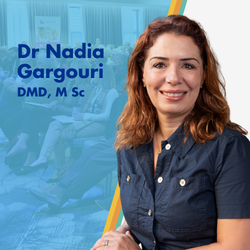
Oral Health Care and Alzheimer’s Disease: Small Actions, Big Impact
Assistant Professor, DMD, M.Sc., Specialized Graduate Diploma in Gerodontology, Faculty of Dental Medicine, Université de Montréal; Researcher at CRIUGM
Nadia Gargouri earned her Doctor of Dental Medicine degree in 1998 and practiced in hospital settings for about ten years. She then completed a master’s degree in Dental Sciences and a specialized graduate diploma in gerodontology at Université Laval. Her thesis, which examined the impact of sodium fluoride toothbrushing among older adults with loss of autonomy, has become a reference work in the field of gerodontology.
Since 2012, she has been a member of the Centre of Excellence for Oral Health and Aging (CESBV) at Université Laval, where she coordinated the Centre’s activities and collaborated with academic and healthcare partners. She contributed to the development of assessment tools and oral health promotion resources for older adults, as well as clinical practice guidelines for various populations, including palliative care patients and adults with traumatic brain injury.
She also served as a public dental health and gerodontology advisor at Quebec’s Ministry of Health and Social Services, participating in the development of programs for long‑term care facilities (CHSLDs). In the academic sphere, she has taught gerodontology at Université Laval and Université de Montréal and has developed online training programs for healthcare professionals. Since July 2024, she has been an Assistant Professor at the Faculty of Dental Medicine at Université de Montréal, where she is engaged in teaching and research in gerodontology, public health, and access to care for vulnerable populations.
Dr. SERGE GAUTHIER, C.M., C.Q., MD, FRCPC
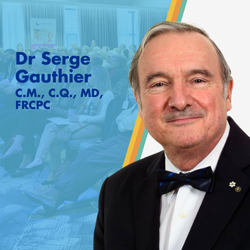
Transforming Approaches through Diagnostic and Therapeutic Innovations in Alzheimer’s Disease
Professor Emeritus of Neurology and Psychiatry, McGill University
Medical studies at the Université de Montréal, neurology residency at McGill University, and postdoctoral research fellowship in the laboratory of Prof. Theodore L. Sourkes at the Allen Memorial Institute in Montréal.
He held a full‑time position at the Montreal Neurological Hospital, later becoming Director of the McGill Centre for Studies in Aging. He was awarded a Research Chair funded by the Canadian Institutes of Health Research (CIHR) and Rx&D, and served as Full Professor in the Departments of Neurology & Neurosurgery, Psychiatry, and Medicine. He is currently Professor Emeritus of Neurology and Psychiatry at McGill University and Co‑Director of the training program on neurocognitive disorders.
His research contributions include the design and execution of randomized clinical trials aimed at establishing the efficacy and safety of cholinesterase inhibitors, muscarinic agonists, memantine, and disease‑modifying molecules for Alzheimer’s disease, both as monotherapies and in combination. He has published 800 scientific articles and 37 books, with an h‑index of 140.
He has a particular interest in developing consensus‑based approaches to the management of Alzheimer’s disease across its stages, in the ethics of research involving vulnerable populations, and in the primary prevention of age‑related cognitive decline.
Ms. ISABELLE GÉLINAS, Ph.D., erg., OT (C)
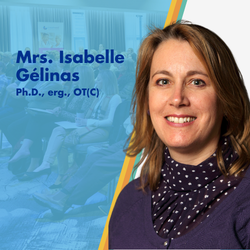
Supporting the Transition to Driving Cessation with the ‘Driving and Dementia Roadmap’
Associate Professor and Graduate Program Director, School of Physical and Occupational Therapy, McGill University
Isabelle Gélinas, PhD, erg., OT(C), is an Associate Professor and Graduate Program Director at McGill University’s School of Physical and Occupational Therapy. She is also a researcher at the Centre for Interdisciplinary Research in Rehabilitation of Greater Montreal (CRIR).
Her primary research interests focus on the various modes of transportation used for community mobility—including driving—among people living with disabilities and older adults. She has developed screening approaches, ecological assessments, and interventions aimed at supporting either the maintenance of driving or the transition to driving cessation.
She works closely with a wide range of partners, including service users, clinicians, and researchers at the provincial, national, and international levels, to develop evidence‑based and clinically relevant approaches. Isabelle Gélinas also developed and coordinates a graduate‑level Certificate in Driving Rehabilitation, offered online through McGill University.
Dr. CLAIRE GODARD-SEBILLOTTE, MD, Ph.D., - Dr. SATHYA KARUNANANTHAN, Ph.D. - Mrs NGOZI IROANYAH

Advancing Equity in Neurocognitive-Related Care in Canada: An Intersectional and Participatory Approach
Respectively: Patient Partner, Ph.D. Candidate, and Director of Health Equity and Access at the Alzheimer Society of Ontario
Our team is part of the Canadian Consortium on Neurodegeneration in Aging (CCNA / CCNV). Our mission is to promote equity in dementia‑related care across Canada by adopting an intersectional and participatory approach that actively involves patients, caregivers, and diverse communities.
Dr. Godard-Sebillotte is a geriatrician and Assistant Professor at McGill University, specializing in improving care pathways for older adults living with cognitive disorders.
Dr. Sathya Karunananthan is an epidemiologist and Assistant Professor at the University of Ottawa, bringing expertise in public health and health equity.
Mrs. Ngozi Iroanyah is a patient partner, doctoral candidate, and Director of Health Equity and Access to Care at the Alzheimer Society of Ontario, contributing lived experience and leadership in patient‑centered initiatives.
Together, we combine clinical expertise, research excellence, and community engagement to develop innovative solutions, policies, and tools that ensure fair and inclusive dementia care for all Canadians.
Dr. ROBERT Jr LAFORCE, MD, Ph.D.
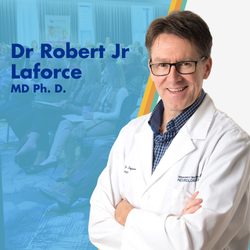
Introducing the Cognitive Health Passport
Neurologist and Neuropsychologist, Associate Professor of Neurology, Faculty of Medicine, Université Laval
Dr. Robert Laforce is a neurologist and neuropsychologist, clinician‑researcher at the Interdisciplinary Memory Clinic of the CHU de Québec, and Associate Professor of Neurology in the Faculty of Medicine at Université Laval. After completing his PhD in Clinical Neuropsychology in 1998, he returned to training to complete his neurology residency in 2011, followed by a specialized fellowship in frontotemporal dementias under the supervision of Dr. Bruce Miller at the University of California, San Francisco, Memory and Aging Center. He also conducted FDG‑PET and amyloid‑PET imaging studies with Dr. Gil Rabinovici at the University of California, Berkeley.
Dr. Laforce has authored more than 200 publications in internationally renowned journals such as JAMA, Lancet Neurology, Brain, Neurology, Annals of Neurology, and Alzheimer’s Research & Therapy. He is the author of a book on memory and several book chapters on imaging in neurodegenerative diseases.
He has a particular interest in atypical dementias. Dr. Laforce is currently leading several projects, including the development and validation of the MoCA‑L and the MLSE, screening tools for primary progressive aphasias. He is one of the principal investigators in the prestigious international studies GENFI (Genetic Frontotemporal Dementia Initiative) and DIAN (Dominantly Inherited Alzheimer Network). Dr. Laforce holds the Research Chair on Primary Progressive Aphasias – Fondation de la Famille Lemaire.
Dr. PAULE LEBEL, MD
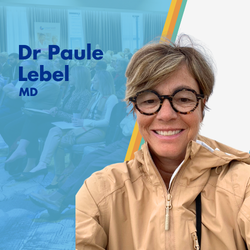
Keeping Your Brain Healthy: An Awareness Workshop Led by Retired Older Adults
Public Health and Preventive Medicine Specialist, Regional Public Health Department, CIUSSS du Centre‑Sud‑de‑l’Île‑de‑Montréal
Dr. Paule Lebel is a specialist in public health and preventive medicine (1982). She has dedicated her career to the field of aging. She currently works as a medical advisor within the “Older Adults Living in the Community” team at the Regional Public Health Department (DRSP) of the CIUSSS du Centre‑Sud‑de‑l’Île‑de‑Montréal.
From 2020 to 2025, she served as Scientific Director of the Réseau Résilience Aîné.es Montréal (RRAM), whose mission is to promote participation, social inclusion, and resilience among older adults in Montréal through local and regional initiatives. She also supports senior citizen engagement initiatives at the Montréal Public Health Department.
As part of the Part’Âge Savoir pour vivre en santé project (2024–2025), funded by the Quebec National Public Health Directorate, she is contributing to the creation of a brain‑health promotion workshop that will be led by retired older adults with backgrounds in health or education, in collaboration with FADOQ‑Mtl and the public health departments of Montréal and Laval.
This workshop will be offered in 2025 in collective living environments and community centers for older adults in Montréal and Laval.
Dr. FANNY LESSARD, D.C.
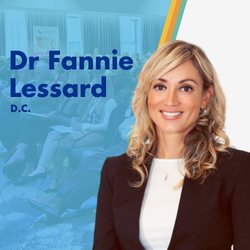
Chiropractic Care: A Complementary Neuro-Musculoskeletal Approach to Cognitive Health
Chiropractor
Dr. Fannie Lessard earned her Doctor of Chiropractic degree from the Université du Québec à Trois‑Rivières in 2001 and is the founder of the Chiro Axion clinic (2016). A member of the Quebec Sports Chiropractic Council, she has 25 years of experience treating sports‑related and chronic injuries.
She works with elite athletes—including triathletes from Club Orange—as well as amateur sports enthusiasts, and she treats the Canadian pickleball champion. Always attentive to cutting‑edge technologies, she offers personalized treatments that combine complementary therapies (laser, TENS, ultrasound), specialized muscle techniques (Active Release, Graston, trigger points), radial shockwave therapy, and spinal decompression.
A passionate triathlete, she completed the Ironman 70.3 Maine in 2018 and has been involved as a spinning instructor at Sani Sport. She also serves as a chiropractor at major events such as Ironman Mont‑Tremblant. Deeply committed to community engagement, she has volunteered at the Dakar Orphanage in Senegal.
Dr. CLAUDE PATRY, MD
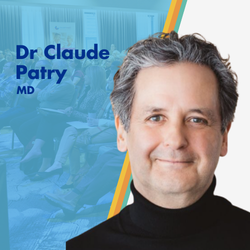
Closing Plenary: Concrete Prevention Actions According to Our Experts
GMF Loretteville and CHSLD Chauveau
Dr. Patry is a physician dedicated to the care and research of Alzheimer’s disease. He practices at GMF Loretteville and CHSLD Chauveau, where he works with patients living with major neurocognitive disorders (MNCD) accompanied by behavioral symptoms.
As Principal Investigator at Alpha Recherche, he leads clinical trials on Alzheimer’s disease. He also serves as the physician responsible for the Alzheimer Plan in the Quebec City region.
He participates in various ministerial committees, including those involved in developing the action plan for the new national Alzheimer’s disease policy.
Me. MARIE-EVE POMERLEAU
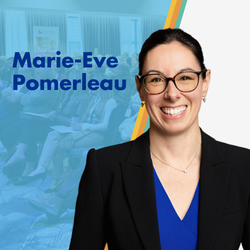
Opening Plenary: When Family Caregivers Speak Up
Board Member, Alzheimer Society of Montreal; Partner at Therrien Couture Jolicœur Firm, Caregiver
Me Marie‑Eve Pomerleau is a lawyer and partner specializing in corporate law, mergers, and acquisitions at the Therrien Couture Jolicœur Firm. She supports businesses and their leaders through pivotal moments in their development, bringing rigor, humanity, and strategic insight to her practice.
Beyond her professional work, Marie‑Eve was also a caregiver for her father, who lived with Alzheimer’s disease, accompanying him with love and dedication until the end of his life.
This deeply personal experience shaped her understanding of the complexity, emotional weight, and resilience required in the role of a caregiver.
She will share this journey with sensitivity and authenticity during the opening plenary, driven by a desire to foster a deeper understanding of the reality faced by families affected by the disease.
Her involvement with the Alzheimer Society of Montreal reflects her commitment to transforming hardship into a source of solidarity, dialogue, and hope.
M. ANDRÉ RICHARD
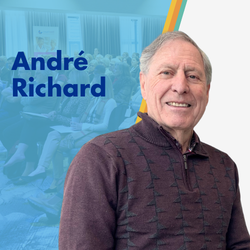
Opening Plenary: When Family Caregivers Speak Up
Panelist with Lived Experience of a Neurocognitive Disorder (NCD)
Originally from Rouyn-Noranda, André moved to Hull in 1974 with his spouse and two daughters to establish a new branch of Groupe La Mutuelle du Canada, providing financial services across the greater Outaouais region.
Everything had to be built from the ground up… However, having managed a consumer lending office serving all of Abitibi for several years, he had learned how to recruit, train, and motivate a team to achieve performance goals. His five years in the Canadian Air Force also allowed him to learn English and instilled in him a discipline that has served him well ever since.
Leading by example, he completed all professional development courses offered by the financial services industry, earning the designation of Certified Financial Planner.
At the end of 2000, at age 60, as outlined in his contract as Regional Director, he retired, proud to have built a team of 32 independent representatives. To this day, he remains in touch with many of them, some of whom have passed the torch on to their children.
A passionate sports enthusiast, hockey was his outlet for work-related pressure. Although he no longer plays, he now organizes and runs a recreational league. To stay active, he regularly enjoys downhill skiing, cycling, and long daily walks.
For 15 years, he and his spouse of over 60 years traveled extensively—mostly by motorhome—enjoying a very active retirement. During the winter months, he would explore new destinations across North America, plan multi-week (and often multi-month) routes, and map out activities along the way.
However, the COVID-19 pandemic brought these travels to a halt and also revealed that his excellent physical health was being challenged by a mild cognitive decline that would gradually progress. After several months of assessments at a Memory Clinic, tests confirmed that his high genetic risk had caught up with him, as beta-amyloid deposits had developed in his brain. A new battle was beginning…
Ms. JIANA SAAD
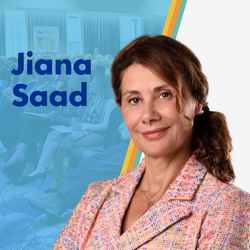
Recharging Your Battery: Concrete Strategies for Proactive Resilience and Emotional Self-Regulation
Teacher and Speaker in Proactive Intelligence
Jiana is an educator with a bachelor’s degree in vocational education and a master’s degree in management. She is also a speaker, certified trainer, and neuroscience coach. Jiana is the author of three books: Je suis Rima, analphabète, BAM (Bouge, apprends et mange), and Au‑delà des larmes. She supports managers and organizations in developing teams that are more effective, more human, and more resilient. She has helped hundreds of individuals unlock their full potential, improve their performance, make more informed decisions, develop leadership skills, and better manage their emotions.
Jiana grew up in the midst of the Lebanese civil war, where she witnessed both physical and psychological violence. These difficult experiences profoundly shaped her path, strengthening her resilience and fueling her desire to understand and help others. After arriving in Canada at the age of 20, she oriented her career toward emotional intelligence, a field that has become the foundation of her work.
Drawing on her personal journey, Jiana is now dedicated to supporting individuals in developing their communication skills and emotional self‑regulation.
Dr. THOMAS TANNOU, MD, Ph.D.
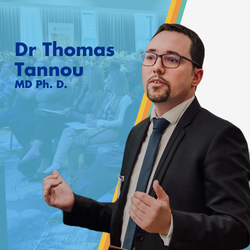
Multiplying Solutions in Aging: Opportunities and Limits of Technology
Geriatric Clinician-Researcher, CIUSS Centre-Sud de l’Île de Montréal, CRIUGM; Assistant Clinical Professor, Faculty of Medicine, Université de Montréal
Dr. Thomas Tannou is a clinician‑researcher specializing in geriatrics and cognitive neuroscience. He practices at the Institut universitaire de gériatrie de Montréal and is an Assistant Clinical Professor at the Université de Montréal.
His research focuses on risk‑taking in the context of cognitive disorders, particularly the impact of impaired self‑awareness (i.e., anosognosia) in Alzheimer’s disease.
He co‑develops technologies aimed at supporting social participation and aging in place for older adults living with neurocognitive disorders.
He is also actively involved in training healthcare professionals and disseminating knowledge in geriatrics.
Ms. JODI TAYLOR
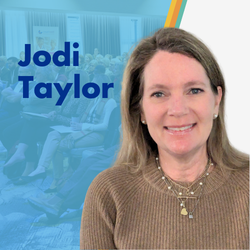
Opening Plenary: When Family Caregivers Speak Up
Caregiver
Sometimes the role of caregiver doesn’t begin with a single moment, but with the quiet realization that the roles between parent and child are slowly shifting. For Jodi Taylor, that realization brought her back to Montréal two years ago, after nearly 30 years in Toronto, so she could be closer to her parents—her father living with Alzheimer’s disease.
While her mother is the primary caregiver, Jodi shares in this emotional journey—moving through love, loss, humor, and resilience as her family learns to live alongside dementia. This experience has profoundly transformed her understanding of presence, patience, and what it means to support someone you love while adapting to constant change.
Jodi holds a bachelor’s degree in political science from Queen’s University and an MBA from Royal Roads University. She leads a customer success team focused on guidance and creating a sense of support for individuals—a mission that now resonates deeply with her personal life as a daughter and caregiver.
Outside of work, Jodi recharges through skiing in the winter and road cycling in the summer. She is honored to share her family’s story in the hope of offering connection, understanding, and comfort to others walking a similar path.
Dr. SYLVIA VILLENEUVE, Ph.D.
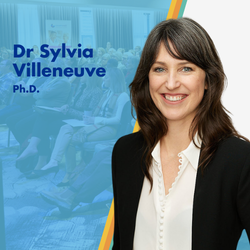
Closing Plenary: “Concrete Actions in Prevention According to Our Experts”
Associate Professor, Department of Psychiatry, McGill University
Dr. Sylvia Villeneuve is an Associate Professor of Psychiatry at McGill University. She has been the Director of the Alzheimer’s Disease Prevention Centre at the Douglas Institute since 2022 and holds the Canada Research Chair in Early Detection of Alzheimer’s Disease. She also leads the Multimodal Imaging of Brain Aging Laboratory.
Dr. CHENJIE XIA, MD

Closing Plenary: Concrete Prevention Actions According to Our Experts
Assistant Professor, Department of Neurology and Neurosurgery, McGill University
Dr. Chenjie Xia completed her medical studies and neurology residency at McGill University.
She then pursued a fellowship in cognitive neuroscience at Massachusetts General Hospital in Boston before returning to Montréal, where she is now a neurologist specializing in cognitive disorders and Co‑Director of the Memory Clinic at the Jewish General Hospital.
She is also an associate member of the Memory Clinic at the Douglas Hospital, where she leads the Alzheimer’s disease prevention clinic.
Official Partner

Partenaires supporteurs
Votre implication lors de l’édition 2025 est inestimable
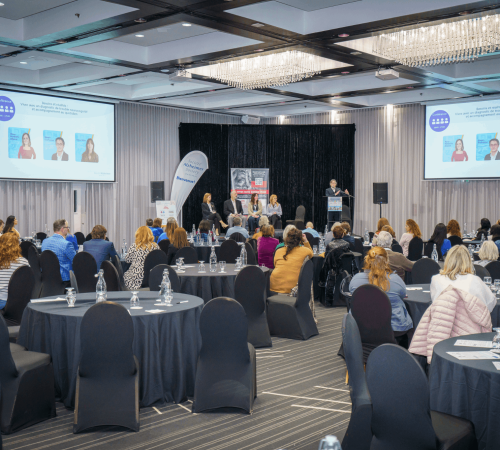
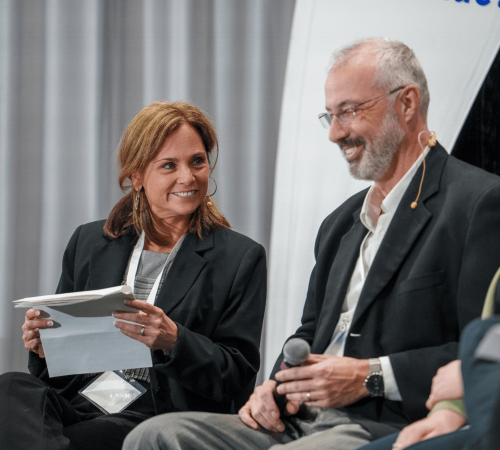
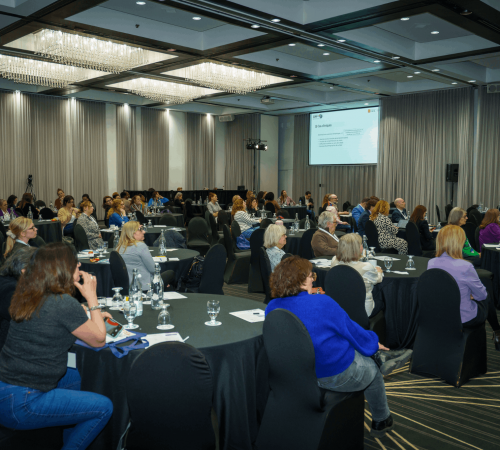
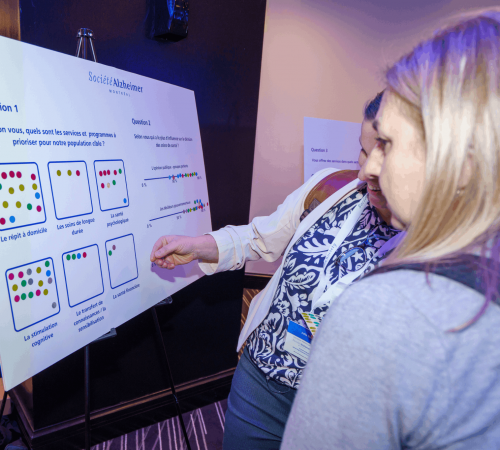
La Société Alzheimer de Montréal tient à remercier chaleureusement toutes les personnes qui ont participé à notre colloque annuel du 8 avril 2025 – que ce soit en personne ou en virtuel.
Grâce à vous, cette journée a été un véritable succès, remplie de rencontres inspirantes, d’échanges riches et de moments de partage autour d’un enjeu qui nous touche tous : mieux comprendre et accompagner les personnes vivant avec un trouble neurocognitif.
Merci à nos conférenciers et conférencières, pour leur générosité, leur expertise et leur engagement.
Merci à nos exposants, bénévoles, partenaires, et à toutes celles et ceux qui ont contribué à faire de cette journée une expérience chaleureuse, dynamique et enrichissante.
Nous espérons que vous repartez avec de nouveaux outils, de nouvelles idées… et de belles connexions humaines.
Ensemble, continuons de faire avancer la cause, de briser les tabous et de soutenir les personnes vivant avec un trouble neurocognitif ainsi que leurs proches.
À l’année prochaine !